
2026-11-01 ·
How to Spot Siding Damage After Coastal Storms in Millsboro
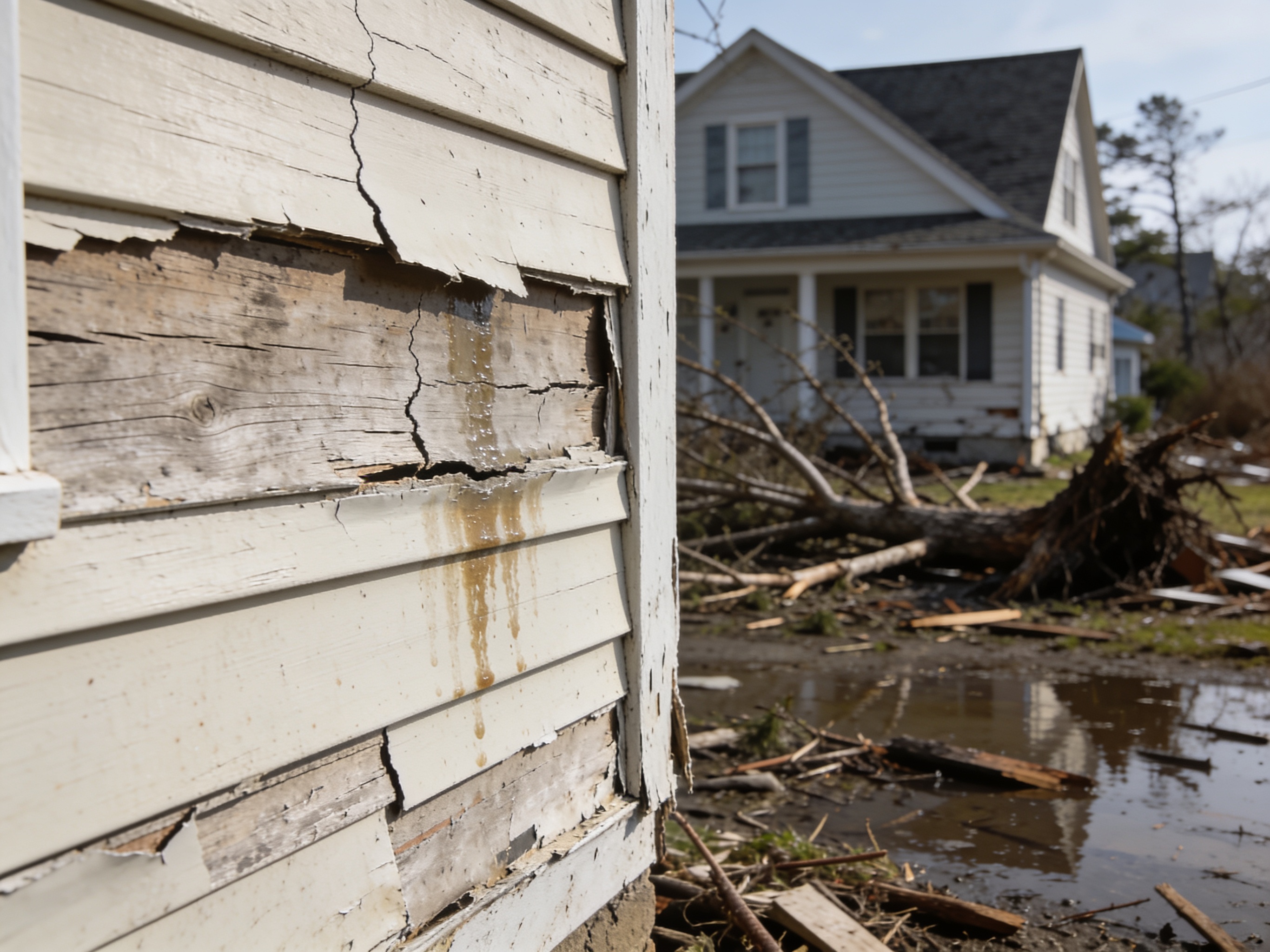
After coastal storms hit Millsboro, check siding first for loose panels or visible cracks along seams, especially on homes facing the Nanticoke River where wind gusts concentrate. These initial signs appear within days as vinyl or wood materials shift from repeated pressure and moisture exposure in the humid subtropical climate.
Spotting Wind and Debris Impact on Siding
Coastal storms bring high winds that drive debris against siding surfaces in neighborhoods like Downtown Millsboro. Look for dents, scratches, or punctures on lower sections where wind accelerates near open terrain. In Millsboro Village, older homes often show these marks first on east-facing walls due to prevailing storm directions from the coast. Examine joints and corners closely, as impact here allows water entry that accelerates rot in underlying sheathing during subsequent hot summers. Mild winters do not fully dry materials, leaving residual moisture that expands small breaches over weeks. Homeowners near Millsboro Pond report similar patterns after heavy rain events combined with gusts, where debris lodges in crevices and holds humidity against the surface.
Checking for Moisture Intrusion After Heavy Rain
Storm-driven rain penetrates siding gaps in Sussex County homes, particularly those built before modern sealing standards. Inspect baseboards and around windows in Millsboro Village for dark streaks or bubbling paint that signals trapped water. The humid subtropical conditions mean even mild winters keep surfaces damp longer than inland areas, worsening damage near the Nanticoke River where soil retains moisture. Walk the perimeter after storms and note any soft spots when pressing on panels. In Lewes and Seaford comparisons, Millsboro homes face added river humidity that speeds mold growth behind compromised siding. Early detection prevents the need for full panel replacement by addressing seal failures at edges before they spread.
Evaluating Siding Around Local Landmarks and Terrain
Terrain near Millsboro Pond creates micro-wind patterns that batter siding on adjacent properties more than open fields. After storms, scan for warping on wood or fiber cement materials common in older Downtown Millsboro stock. The flat landscape allows rain to pool against foundations, pushing moisture upward into lower siding courses. Seaford-area homes show parallel issues but Millsboro's river proximity adds salt air that corrodes fasteners faster. Check for nail pops or shifted trim pieces, which indicate movement from repeated wetting and drying cycles. These conditions differ from drier inland spots and require targeted inspections focused on south and east exposures where storms approach most directly.
When to Schedule a Professional Siding Inspection
If multiple signs appear across several walls, contact a local crew for detailed assessment rather than attempting repairs alone. Siding Inspection helps document storm effects on specific materials used in Millsboro homes. Storm-Damaged Siding Repair addresses issues before they require House Siding Replacement. For material choices that better withstand ongoing humidity, review Choosing Siding Materials That Handle Millsboro Humidity and Freeze Cycles. BAAM Roofing & Siding operates Mon–Fri 8am–6pm and Sat 9am–2pm to handle post-storm evaluations in the area.